
WHE 2025 Emerges as a Key Platform for the Global Hydrogen Value Chain, Showcasing Innovators Set to Lead the Market
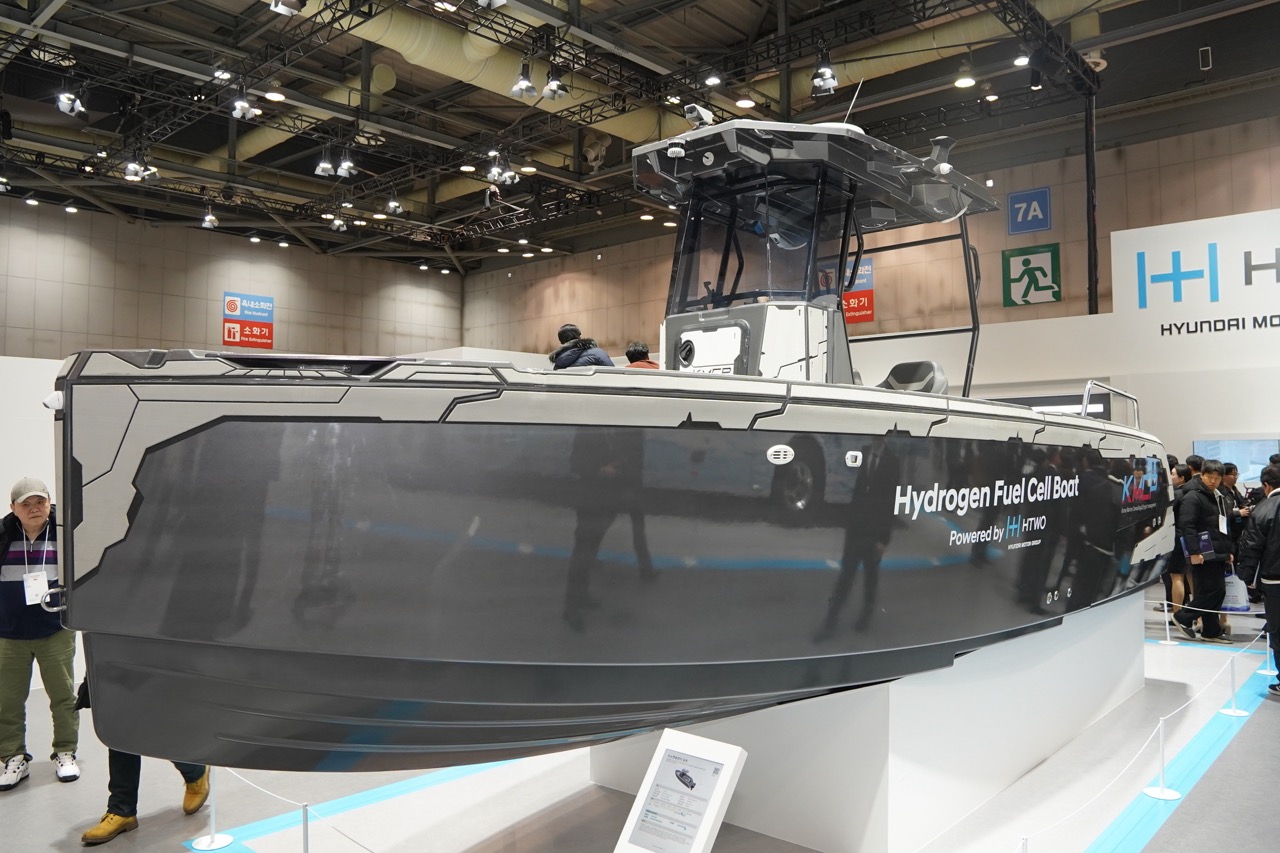
KMCP's hydrogen fuel cell propulsion boat, EL-KUS, displayed at Hyundai Motor Group’s booth at World Hydrogen Expo 2025

A titanium porous transport layer (Ti-PTL) from ENERICH
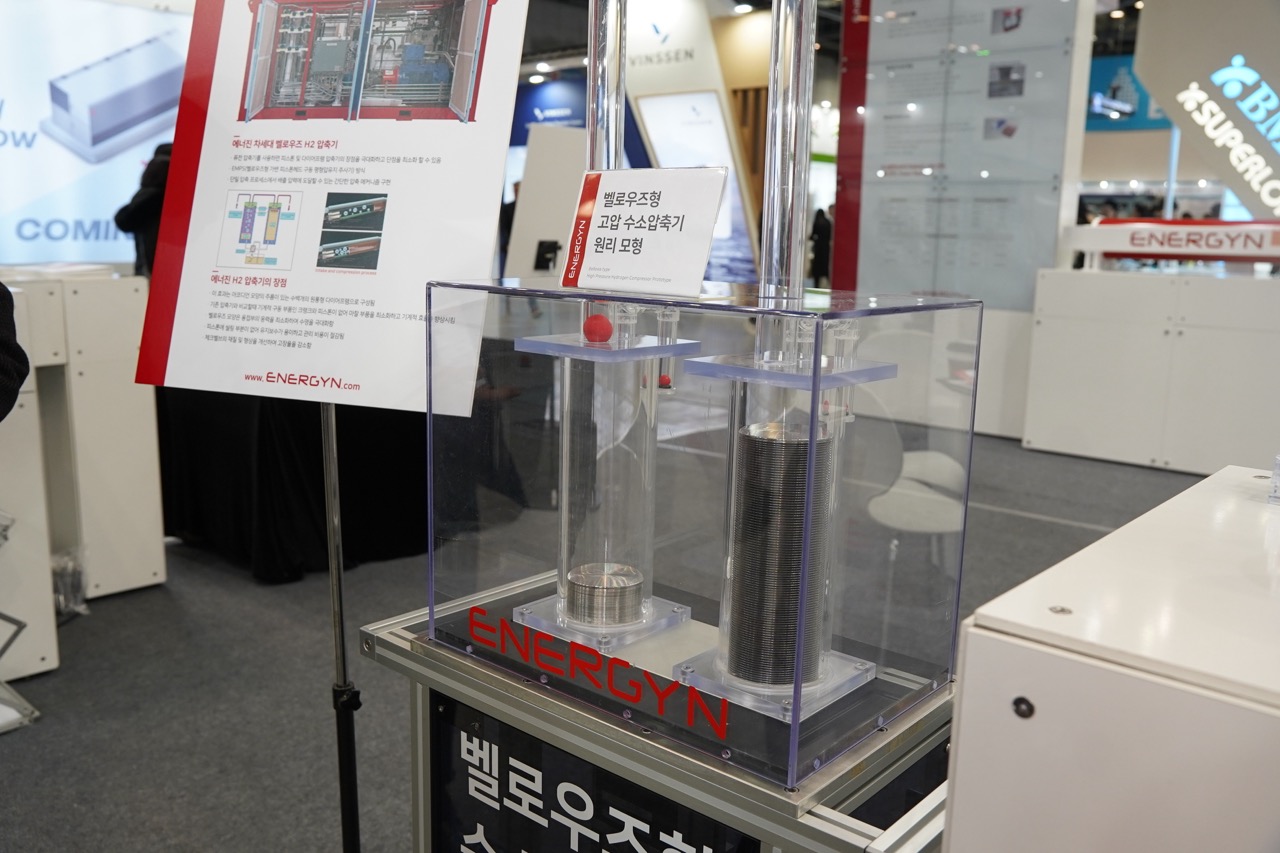
ENERGYN demonstrates its bellows compressor (cylinder) at World Hydrogen Expo 2025
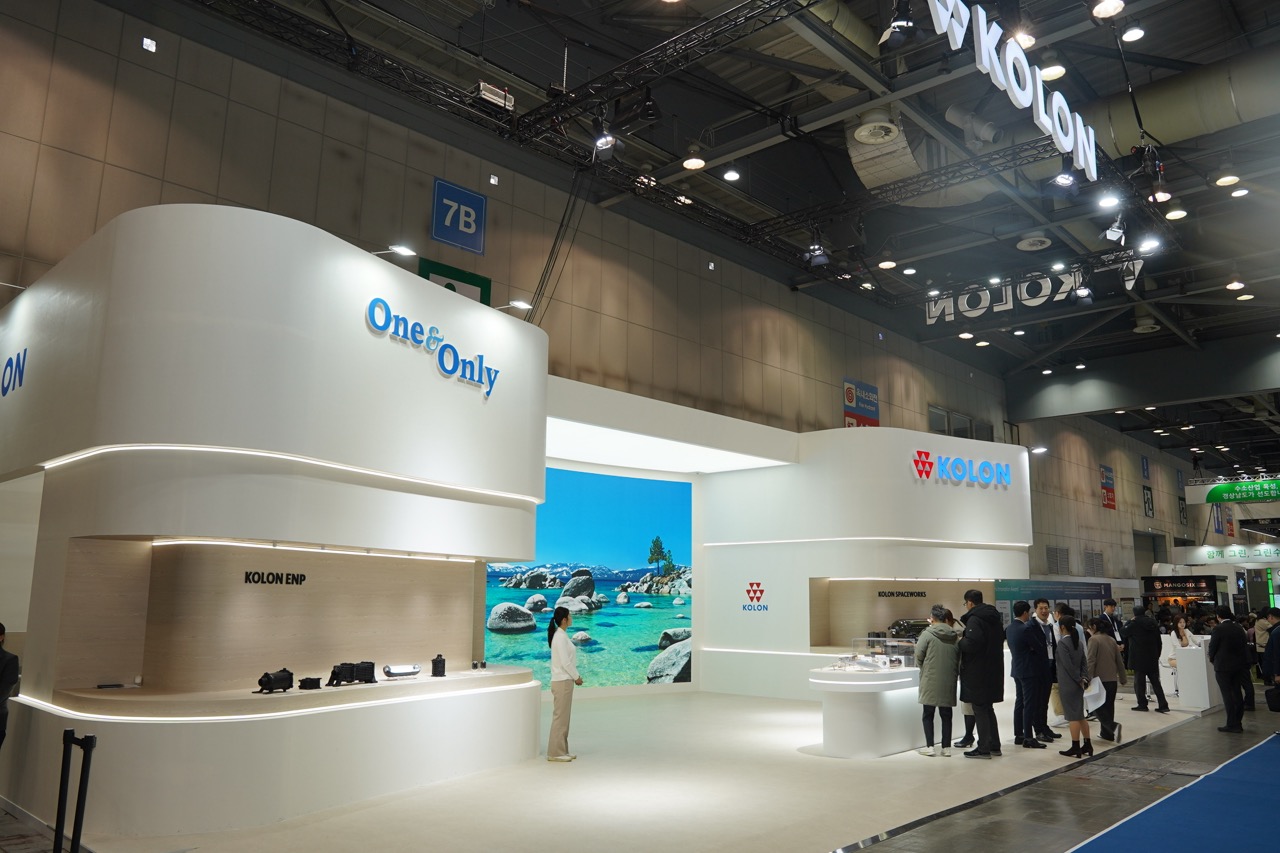
Pavilion of Kolon Group at the World Hydrogen Expo 2025
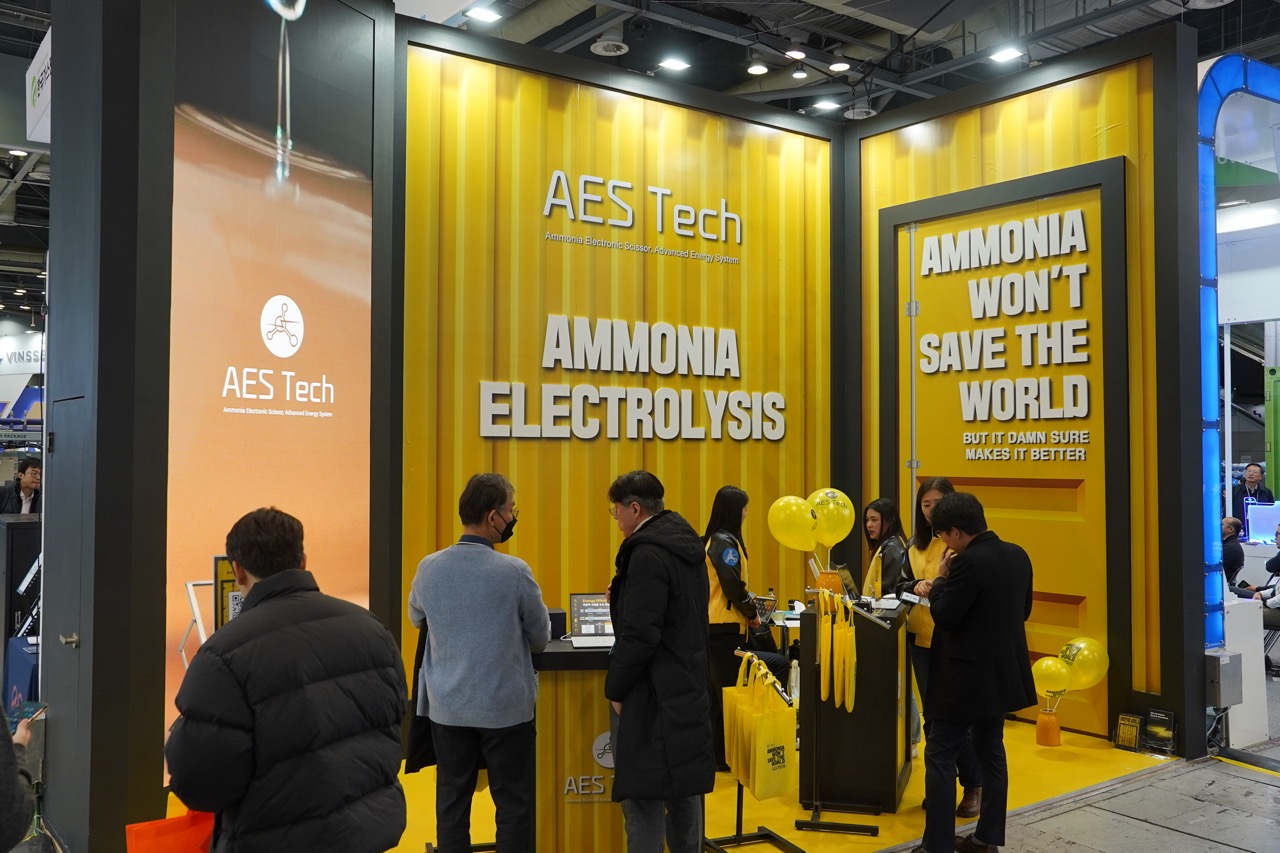
AES Tech booth at the World Hydrogen Expo 2025
Among the solutions gaining global consensus, RE100, the complete transition to renewable energy, stands out as the most practical pathway. At the core of this transition lies hydrogen, widely regarded as the only truly carbon-free energy carrier capable of addressing the intermittency and efficiency limitations of other renewable sources.
Reflecting this global shift, Korea’s government has moved swiftly to strengthen hydrogen policy frameworks. Since taking office, the Lee Jae-myung administration has prioritized hydrogen-economy planning, supported by the establishment of the Ministry of Climate, Environment, and Energy. A notable recent milestone was the revision of safety standards to permit hydrogen extraction via ammonia cracking, following extensive demonstrations in the Chungbuk Special Zone for the Green Hydrogen Industry, conducted through close cooperation among the central government, local authorities, and the private sector.
At the opening ceremony of the World Hydrogen Expo 2025 (WHE 2025) on December 4, Minister Kim underscored hydrogen’s role in addressing renewable-energy intermittency and efficiency challenges, stating that Korea would spare no effort to support the expansion of hydrogen ecosystems across production, storage, transport, and utilization.
Against this policy and market backdrop, WHE 2025 opened at KINTEX Exhibition Center 2 in Goyang and concluded successfully on December 7, welcoming approximately 25,000 visitors over four days.
Held under the theme “Hydrogen Pioneers: Innovate, Unite, and Accelerate,” WHE 2025 marked a turning point for the event through the full integration of Korea’s largest hydrogen exhibition, H2 MEET, with a global conference. Exhibition showcases, international conferences, and structured networking programs were tightly interlinked, positioning WHE as a comprehensive platform spanning the entire hydrogen value chain.
The conference and networking sessions brought together policymakers, technology leaders, and industry executives to discuss clean-hydrogen policy directions, international standardization strategies, and long-term market outlooks. On the exhibition floor, more than 22,000 square meters of space featured 52 hydrogen production companies, 68 storage and transport companies, 64 utilization companies, and 43 institutions and organizations, demonstrating the breadth and depth of the global hydrogen ecosystem.
Major Korean corporations, including Hyundai Motor Group, HD Hyundai Infracore, and Kolon Industries, presented groupwide hydrogen roadmaps and advanced technologies. At the same time, global leaders such as 3M, Emerson, Linde, Henkel (Loctite), TÜV SÜD, and Air Liquide operated large-scale booths, reinforcing WHE 2025’s standing as an internationally recognized hydrogen platform.
Alongside these established players, one of the most notable aspects of WHE 2025 was the strong presence of small and medium-sized enterprises and startups. These emerging challengers demonstrated originality, technological maturity, and market readiness that matched, and in some cases rivaled, that of major corporations, offering a clear signal that the hydrogen market is entering a phase of acceleration and diversification.
Among hydrogen production innovators, ENERICH Co., Ltd. drew attention for its development of titanium porous transport layers (Ti-PTL), a core component for PEM electrolysis systems used in green hydrogen production. By applying tape casting, high-temperature vacuum sintering, plasma treatment, and platinum coating technologies, ENERICH has achieved high porosity, corrosion resistance, and durability. With demonstrations underway at major Korean corporations and tests expanding into Europe and North America, the company plans to enter full commercialization and global markets beginning in the first half of next year.
In the field of hydrogen extraction, AES Tech presented ammoNOVA, an anhydrous ammonia electrolysis solution designed to produce high-purity hydrogen at low temperatures. Unlike conventional thermochemical cracking, ammoNOVA minimizes energy consumption and greenhouse gas emissions while offering flexible operation linked to renewable energy fluctuations. The company positioned the technology as a scalable solution for hydrogen refueling stations, industrial processes, power generation, and data-center applications, with WHE serving as a launchpad for global partnerships and standardization efforts.
Hydrogen storage innovation was also prominently featured through Kolon Spaceworks, which introduced advanced composite materials and high-pressure hydrogen storage vessels using its proprietary Towpreg technology. By combining carbon fiber and epoxy resin with optimized lay-up processes and ultra-heat-resistant liners, the company has achieved significant weight reduction while meeting stringent international safety certifications, including UN ECE R134. Kolon Spaceworks aims to expand applications beyond vehicles into aviation, defense, and high-pressure industrial storage.
At the hydrogen infrastructure equipment exhibition, ENERGYN Co., Ltd. showcased its bellows-type hydrogen compressor, designed to operate without lubricants and minimize contamination risks. By leveraging the elastic deformation of corrugated metal tubes, the compressor delivers stable operation at pressures up to 100 MPa while reducing maintenance requirements and extending equipment lifespan. Global stakeholders highlighted the technology’s potential to reshape hydrogen storage and transport systems.
Hydrogen utilization in mobility was represented by KMCP Co., Ltd., which unveiled EL-KUS, a hydrogen fuel cell–battery hybrid leisure boat that advanced to the finals of the H2 Innovation Award. Integrating Hyundai Motor’s NEXO fuel cell system with a lightweight FRP hull and autonomous navigation technology, EL-KUS demonstrated a viable blueprint for eco-friendly marine mobility, combining performance, safety, and emissions reduction.
Through these diverse showcases, WHE 2025 reaffirmed its role as a global convergence point where policy, technology, and business intersect across the hydrogen value chain. The event highlighted not only established leaders but also the next generation of innovators poised to shape the global hydrogen market.
Looking ahead, the organizers announced that WHE 2026, scheduled for November next year, will return on a larger scale with deeper content, strengthening organic links among technology, policy, and business, further to solidify its position as a world-leading hydrogen industry platform.
World Hydrogen Expo (WHE) is a global hydrogen industry event that brings together companies, policymakers, researchers, and investors to showcase cutting-edge technologies and foster international cooperation. Integrating the International Hydrogen Conference with the H2 MEET exhibition, WHE covers the whole hydrogen value chain from production and storage to transport and utilization, positioning itself as a central hub for global hydrogen collaboration and market development.
SJ PARK
H2 MEET Organizing Committee
+82 2-3660-1858
email us here
Visit us on social media:
LinkedIn
Instagram
Facebook
YouTube
Legal Disclaimer:
EIN Presswire provides this news content "as is" without warranty of any kind. We do not accept any responsibility or liability for the accuracy, content, images, videos, licenses, completeness, legality, or reliability of the information contained in this article. If you have any complaints or copyright issues related to this article, kindly contact the author above.
