

Science 37 Becomes First FDA-Inspected Site to Deliver Clinical Trials to Patients' Homes
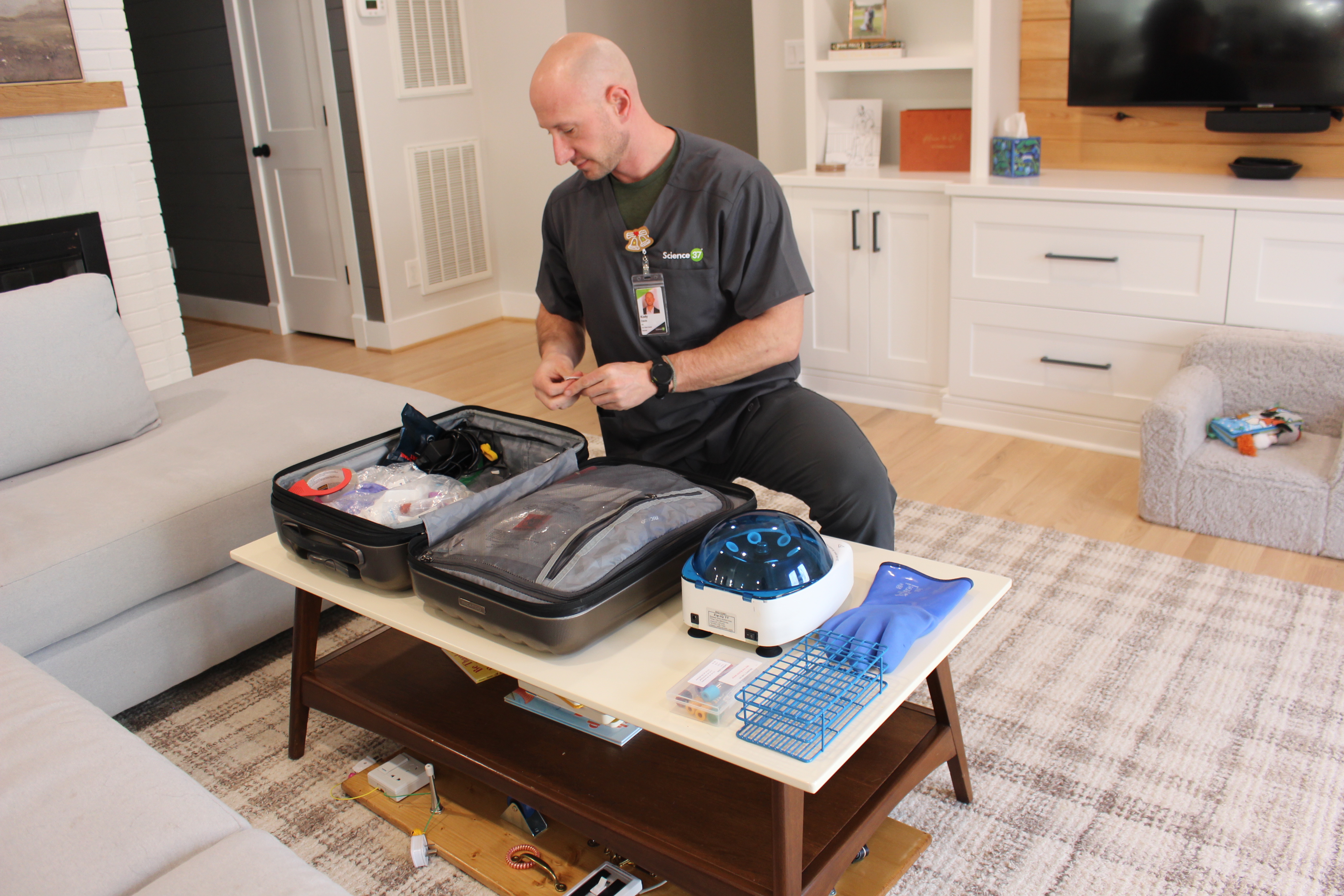
Science 37 delivers clinical research trials directly to patients' homes.
Science 37 is a leading patient access company in clinical research that delivers trials directly to patients' homes.
We go directly to the patient’s home, providing a seamless clinical trial experience that eliminates the need for them to travel and spend long hours in hospital settings.”
MORRISVILLE, NC, UNITED STATES, February 6, 2026 /EINPresswire.com/ -- Clinical trials are the research studies required to test the safety and effectiveness of new medicines and treatments before they can be approved for public use. Yet participation remains limited. Fewer than 5% of eligible Americans take part in clinical research, often because trials require repeated visits to hospitals or research centers that may be far from where patients live and work. — Tyler Van Horn, CEO of Science 37
Science 37 is aiming to change that model. The company has become the first FDA-inspected site to deliver clinical trials directly to patients' homes across the United States. By shifting trials out of traditional medical centers and into patients’ everyday lives, the company’s Direct-to-Patient model is designed to expand access, reduce burden, and make research more representative of the population it aims to serve.
"Our approach is different than what others are doing currently in this space,” says Tyler Van Horn, CEO of Science 37. "We go directly to the patient’s home, providing a seamless clinical trial experience that eliminates the need for them to travel and spend long hours in hospital settings."
Traditionally, clinical trial participation depends heavily on geography. Patients must live near major academic medical centers or large research hospitals, leaving wide areas of the country with limited or no access to trials. These gaps have contributed to what researchers often call “clinical research deserts,” regions where participation is rare despite high medical need.
Science 37’s model is designed to remove those geographic constraints. Operating as a single FDA-inspected site, the company deploys licensed investigators and mobile research teams nationwide. According to the company, its clinicians hold licensure across all 50 states, allowing studies to reach patients wherever they live rather than requiring patients to travel to a centralized location.
"In any given trial, typically only about 8% of patients have access to clinical research within their local geography,” Van Horn says. “We provide access to the other 92% of patients who otherwise would not have the opportunity to participate.”
Regulatory oversight is a key concern as clinical trials move beyond traditional hospital settings. Science 37 has been inspected by the FDA three times in the past 18 months. In each inspection, regulators identified no violations or issues requiring corrective action.
This outcome, known as a “No Action Indicated” classification, means the FDA found the company’s trial operations to be compliant with regulatory standards. The inspections provide external validation that clinical trials can be conducted safely and consistently outside of conventional research sites.
Over the past year, the company’s growth has accelerated as more pharmaceutical sponsors explore alternatives to traditional site models. Science 37 now supports studies across a range of therapeutic areas, including, but not limited to, the central nervous system, respiratory, pulmonology, cardiovascular, and cardiology. The company has also expanded into the fields of metabolism, endocrinology, and cardio-metabolism. It specializes in rare and ultra-rare diseases, particularly in regions with geographically dispersed patient populations.
Notably, pediatric trials, including those for movement disorders and conditions such as Fragile X Syndrome and Prader-Willi Syndrome, have become a growing focus. These studies often involve patients who are unable to travel frequently due to medical complexity, mobility challenges, or distance from research centers. In such cases, at-home participation may not only be more convenient but essential to enrollment.
"We are seeing more sponsors adopt this approach,” Van Horn says. “It has been beneficial both for the patients we serve and for advancing research more efficiently.”
As healthcare delivery continues to move beyond traditional clinical settings, clinical research is beginning to follow the same trajectory. With enrollment challenges persisting nationwide, new models are prompting broader questions about how trials are designed, where they take place, and who is ultimately able to participate.
By bringing clinical trials into patients’ homes, Science 37 represents one approach to addressing those challenges, signaling a potential shift in how medical research may be conducted in the years ahead.
Carli Markle
Science 37
+1 984-377-3737
carli.markle@science37.com
Legal Disclaimer:
EIN Presswire provides this news content "as is" without warranty of any kind. We do not accept any responsibility or liability for the accuracy, content, images, videos, licenses, completeness, legality, or reliability of the information contained in this article. If you have any complaints or copyright issues related to this article, kindly contact the author above.
