
Iranian Singer Morteza Darestani Expands Global Presence with New Protest-Inspired Music Releases

Morteza Darestani is a Singer
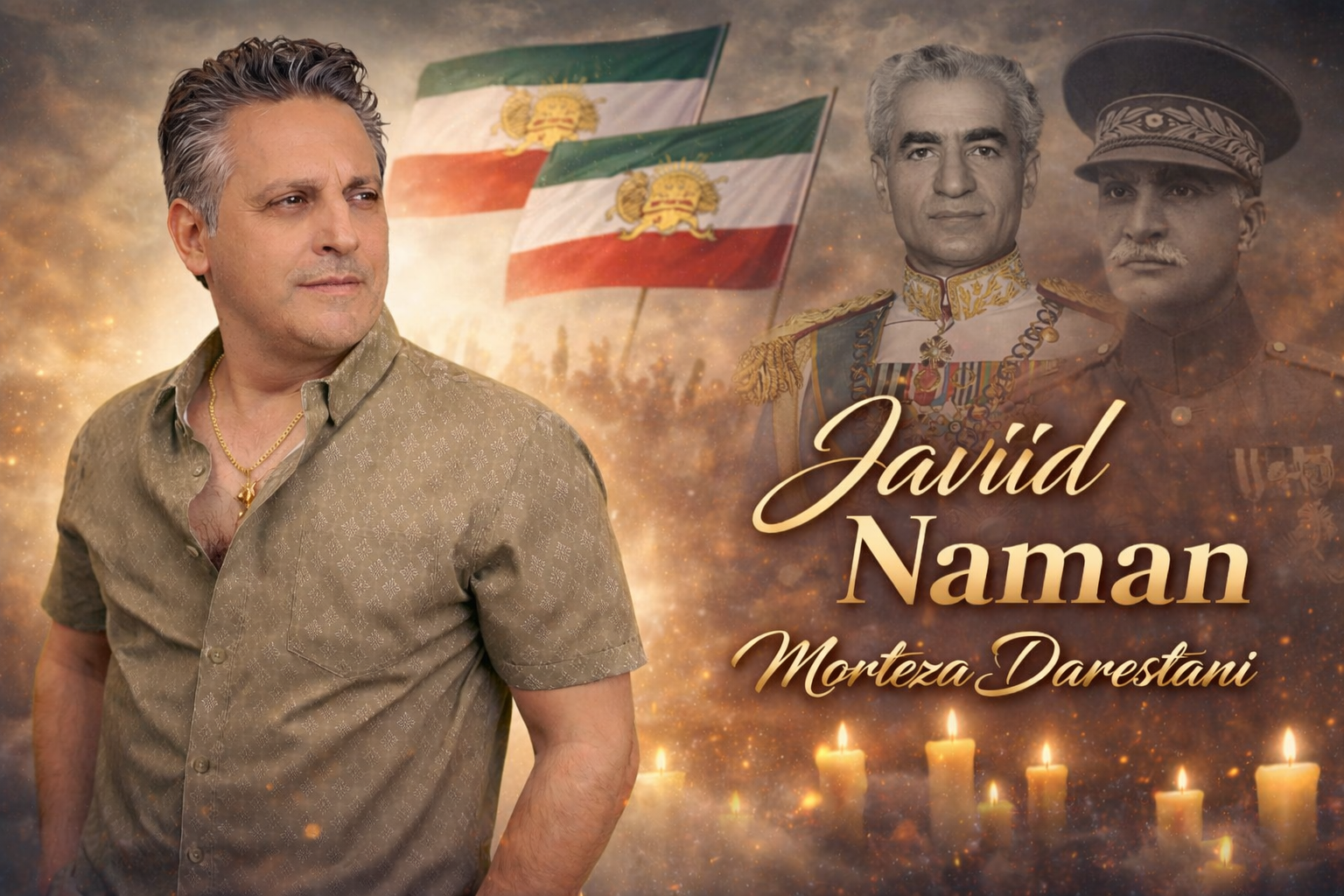
Javid Naman By Morteza Darestani
Iranian singer Morteza Darestani releases new music reflecting Iran’s social climate while continuing his global journey as a pop musician and composer.
LOS ANGELES, CA, UNITED STATES, March 5, 2026 /EINPresswire.com/ -- Iranian singer and pop musician Morteza Darestani continues to strengthen his presence in international Persian pop music with a series of recent musical releases that reflect both personal artistic evolution and broader cultural narratives connected to Iran and its global diaspora.With a career spanning more than three decades, Morteza Darestani has developed a distinctive identity as a singer, songwriter, composer, and multi-instrumentalist whose work blends emotional storytelling with melodic Persian pop traditions. His music frequently reflects themes of resilience, cultural identity, and social awareness, elements that have shaped his reputation among listeners across multiple generations.
Born in Iran, Darestani began his musical journey at the age of fourteen when he first started playing keyboard entirely by ear. Without formal training at the outset, he quickly demonstrated an exceptional natural ability to reproduce melodies he heard. Within months he had progressed to performing songs while simultaneously singing and playing keyboard, revealing a deep intuitive connection to music.
Recognizing the importance of academic training, Darestani later pursued formal music education, studying music theory and composition. During this period he also began learning drums, adding rhythmic depth to his musical abilities. His early years were marked by experimentation in songwriting and arrangement, skills that later allowed him to develop a highly independent approach to music production.
In 2000, Morteza Darestani released his first official album, Narafteh Az Yad, after receiving authorization from Iran’s Ministry of Culture and Islamic Guidance. The album marked a turning point in his career and quickly gained commercial attention, ranking among the ten best-selling cassette releases in Iran during its first month. The success introduced his voice and songwriting to a wider audience and established him as a promising Iranian singer within the Persian pop music scene.
Shortly after the album’s release, however, his career faced unexpected obstacles. A music video for the song Aroosako Bayad Dark Konam was broadcast twice on Iranian national television. Following these broadcasts, Darestani was reportedly restricted from appearing on television and from having his voice broadcast publicly. These limitations created significant challenges for continuing his professional work within Iran’s official music industry.
In 2008, he made the decision to leave Iran and pursue a new chapter abroad. After a transitional period outside the country, he eventually settled in the United States, where he began rebuilding his musical career. The experience of migration and artistic reinvention became a defining theme in his creative journey.
Following several years dedicated to rebuilding his life and professional stability, Darestani returned to releasing music internationally around 2016. During this renewed phase of his career he introduced singles including Aroosi and Junami, works that helped reconnect him with audiences interested in contemporary Persian pop music.
As both a pop musician and composer, Darestani remains closely involved in the creative process behind his music. Many of his songs are self-composed and arranged, reflecting his background as a multi-instrumentalist. His experience with keyboard and drums often influences the musical structure and emotional tone of his recordings.
In November 2025, Darestani released the single “Vala Tabar,” which combined contemporary pop production with socially reflective themes related to current discussions surrounding Iranian identity and political discourse. The song featured lyrics by S.H., arrangement by Fardin, and visual direction supported by AI-assisted design from Milad.
In early 2026, Darestani continued this creative momentum with additional releases that explore themes connected to social awareness and collective memory within Iranian society.
One of these works, “Irano Pas Migirim” (released January 20, 2026), presents a musical interpretation of a slogan that has appeared frequently among segments of Iranian protest movements. The music video accompanying the song portrays an emotional narrative reflecting public sentiment and cultural identity.
Another release, “Molla Par,” published on February 11, 2026, offers a protest-inspired musical statement addressing historical tensions and social discussions surrounding political power in Iran. The music video combines visual symbolism and lyrical expression intended to portray frustration and hope expressed by parts of Iranian society.
Darestani’s most recent project, “Javid Naman,” continues this thematic direction. The music video reflects on recent events in Iran and is structured around themes of remembrance and collective memory. Throughout the piece, references to Iranian history and cultural identity appear as part of a broader artistic narrative about the nation’s past, present, and possible future.
Across these releases, the work of Morteza Darestani illustrates how contemporary Persian pop music can serve as both artistic expression and cultural commentary. By combining emotional vocal performance with socially aware lyrics, the Iranian singer continues to build a body of work that resonates with audiences interested in music shaped by lived experience.
Industry observers note that the global Persian diaspora has played an increasingly important role in supporting artists who create music outside the constraints of domestic media structures. Musicians like Darestani, who have experienced both censorship and migration, represent a growing segment of independent Persian pop artists producing music for international audiences.
Today, the name Morteza Darestani represents more than a performer alone. His career reflects a long journey that includes early musical discovery, professional recognition, political restrictions, migration, and creative renewal.
As new songs and videos continue to reach listeners worldwide through digital platforms such as YouTube, Spotify, and social media, Darestani’s work remains part of the evolving landscape of modern Persian pop music.
Through a combination of personal storytelling, musical composition, and cultural reflection, the Iranian singer continues to contribute to the global conversation surrounding Iranian identity, music, and artistic expression.
Morteza Darestani
Iranian singer
info@mortezadarestani.com
Visit us on social media:
Instagram
YouTube
Other
Javid Naman by Morteza Darestani
Legal Disclaimer:
EIN Presswire provides this news content "as is" without warranty of any kind. We do not accept any responsibility or liability for the accuracy, content, images, videos, licenses, completeness, legality, or reliability of the information contained in this article. If you have any complaints or copyright issues related to this article, kindly contact the author above.
